
“Faith shows the reality of what we hope for; it is the evidence of things we cannot see.” – Hebrews 11:1 (NLT)
What does this mean? Well, to distill it down, it simply means that faith = hope. To go a bit further, faith = living hopefully (living optimistically is another good way of thinking about it). Based on a quick Google search, here are some definitions of hope: “a feeling of expectation and desire for a particular thing to happen,” “a person or thing that may help or save someone,” “grounds for believing that something good may happen,” and “a feeling of trust.”
Let’s give a few quick examples. As children, don’t we all experience a “feeling of expectation and desire” for Christmas morning—a day of no school, bright lights, hot cocoa, a wonderland of snow, and, perhaps most importantly, all the new and exciting gifts from Santa? Or maybe more recently, you booked a flight for a relaxing beach vacation, which gave you strong “grounds for believing that something good” was going to happen.
It is quite clear that the days before Christmas and the weeks leading up to a relaxing beach vacation are moments where we all find ourselves living hopefully. So, does this mean that we all have faith? Let’s look at this more closely.
The author of Hebrews spends the rest of chapter 11 giving examples of what it looks like to have true, biblical faith. One of my favorite examples, in verse 22, states:
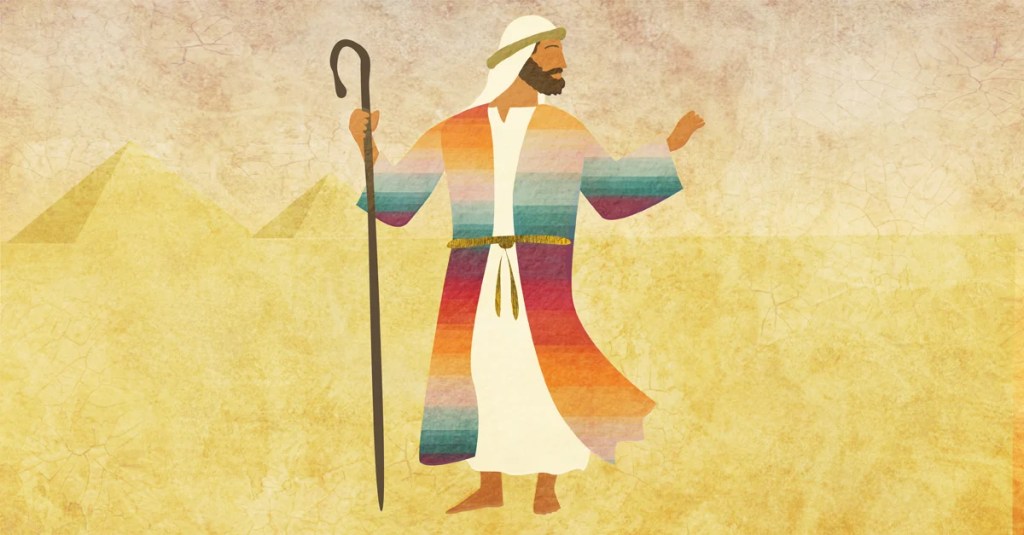
“It was by faith that Joseph, when he was about to die, said confidently that the people of Israel would leave Egypt. He even commanded them to take his bones with them when they left.”
For some context, during the day of Jacob—Joseph’s father—the Israelites had to leave their promised land (Canaan) and flee to Egypt because of a severe famine. Although the grain in Egypt helped the Israelites survive and Joseph and many others in his generation had spent nearly their whole lives there, Joseph knew that Egypt was not their true home. This is because much earlier, God had promised Abraham, Joseph’s great-grandfather, that all his descendants would inherit the promised land (Genesis 12:7). Therefore, Joseph’s faith is demonstrated in his hope for a better, promised reality for his people.
And take note: it wasn’t some weak, measly hope such as, “Maybe one day we’ll leave Egypt… or maybe not, who knows?” No, Joseph said confidently that they would leave, and he was actually so confident that he commanded his people to take his bones with them when they did. You may be wondering, “What evidence does Joseph have to confidently claim these things?” Faith in God and His promises is the evidence, going directly back to Hebrews 11:1.
Faith in God is not a standard, scientific kind of evidence. You cannot manipulate variables to determine if faith in God is true and reasonable. But you can run a ‘sort of’ experiment in your own life if you’re struggling to believe. Go into the Bible and find one of God’s promises. My favorite is Isaiah 60:22, which states, “At the right time, I the Lord will make it happen” (I actually have this verse tattooed on my collarbone). You can test this promise in your life to see if it is actually true.
For example, say you’re feeling impatient about something—maybe you’ve been unemployed for some time and are waiting on a job offer. For this, you could try completely forfeiting your own personal timeline and instead adopting God’s timing to see if He delivers at the right moment. If He doesn’t and you’re left indefinitely waiting, then you could conclude that belief in God’s promises and providence is not reasonable. But if He does act—say, by bringing the job offer at the perfect time—then you must believe. Testing the Scriptures in this way is truly wise, just as Acts 17:11 says:
“Now the Berean Jews were of more noble character than those in Thessalonica, for they received the message with great eagerness and examined the Scriptures every day to see if what Paul said was true.”
Joseph specifically went through a unique set of trials in his earthly life. Just to name a few: his brothers were deeply jealous of him and attempted to kill him as a young boy, they then sold him into slavery and told their father he was dead, he was forced to live as a slave in a far-off country, and he was falsely accused of seducing an Egyptian officer’s wife and thrown into prison. Joseph went through 13 long years of some of the most severe hardships. So why was he so confident in God’s goodness and His promises?
If we circle back to the earlier definitions of hope—as “a person or thing that may help or save someone”—we begin to see how Joseph’s fortified hope in God acted as both his guide and his source of salvation during those trials. Through all his afflictions, Joseph never gave up hope that God would help or save him. The Bible says that during his time of slavery and imprisonment, “The Lord was with him” and “showed him His faithful love,” so Joseph “prospered in everything he did” (Genesis 39:2, 21).
Joseph shows us what faith in action looks like: hope that sustains, guides, and ultimately saves. Whatever trials we may face—whether long delays, setbacks, or moments of uncertainty—our hope in God to lead us to redemption, blessing, and fulfillment beyond imagination is never wasted.
Have hope in all things, for “with God everything is possible” (Matthew 19:26).
 Finding Your Faith